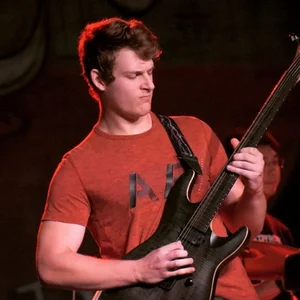
That sudden surge of cold sweat, the racing pulse, the dry mouth, and the sneaky voice in your head whispering, "What if you mess up?"
If you've ever stepped onto a stage, you know this feeling all too well.
Whether you’re a musician, actor, public speaker, or presenter, performance anxiety (or "stage fright") isn't a sign that you aren't ready. It is simply your body's survival mechanism kicking in. When you step in front of a crowd, your brain interprets the room full of eyes as a potential threat, triggering a rush of adrenaline and cortisol.
The law of thermodynamics states that energy can’t be created or destroyed, but that it can be transferred or altered. That being said, the goal isn't to eliminate that anxious energy entirely; it’s to redirect it. Here is a practical, step-by-step framework to manage live performance anxiety before, during, and after you take the stage.
1. Pre-Show Preparation: Build your Safety Nets
Confidence on stage is rarely built on the stage itself; it is engineered days and weeks beforehand.
Practice Beyond Autopilot: Don't just practice until you get it right; practice until you CAN’T get it wrong. Work through tricky transitions, unexpected interruptions, or technical hiccups during rehearsals, so your muscle memory holds strong under pressure.
Anchor the First 60 Seconds: Performance anxiety usually peaks during the first minute of a live set. Memorize your opening lines, song entry, or first chords so thoroughly that you can execute them on total autopilot while your nervous system settles down.
Visualize the Success (and the Failures): Spend five minutes daily imagining a successful performance. Equally important: practice catastrophe reframing. Visualize a mistake happening, like dropping a pick or missing a note, and mentally rehearse staying calm and continuing smoothly.
2. Backstage Tactics: Calming the Nervous System
In the 30 minutes leading up to showtime, physical symptoms peak. Try using target physiological triggers to down-regulate your fight-or-flight response.
Tactic A: The Physiological Sigh
To rapidly slow down a racing heart rate, use the physiological sigh:
Take two quick, consecutive deep breaths through your nose (one full breath, followed by an immediate extra top-off inhale).
Follow with a long, slow, audible exhale through your mouth.
Repeat 3 to 5 times to immediately drop heart rate and reduce stress.
Tactic B: Reframing Anxiety as Excitement
Physiologically, anxiety and excitement are nearly identical: both involve elevated heart rate, heightened sensory awareness, and adrenaline production.
Research from Harvard Business School shows that simply telling yourself "I am excited" instead of "I need to calm down" shifts your mindset from a threat state (fear) to an opportunity state (anticipation), significantly improving performance output.
3. On-Stage Strategies: Navigating the Spotlight
Once you step into the light, your focus needs to shift outward from internal panic to external engagement. Here are some quick fixes to challenges that I’ve faced while performing on stage:
Tunnel vision / Overwhelm: Pick 3 "friendly faces" or points in the audience (left, center, right) to anchor your gaze instead of staring into the void. Or at the very least, find 3 points on the back wall of the room to look at. That way, it looks like you’re looking at the audience. When in reality, you’re trying to forget that they’re in the room.
Physical tension / Trembling: Intentionally ground your feet into the floor. Flex and release your toes to draw focus down to your lower body.
A minor mistake occurs: The 3-Second Rule: Never grimace, stop, or apologize. 90% of the audience won't notice a flaw unless you or your body language announces it.
4. Post-Show: The Debrief
How you handle the post-show moment dictates how anxious you will feel next time.
Resist the Post-Mortem Trap: Immediately after leaving the stage, your brain is flooded with fatigue and leftover hormones, making you prone to negative self-talk. Don’t fall for the trap, and give yourself the reassurance that you deserve!
Write Down 3 Wins: Before analyzing any errors, list three specific things that went well.
Treat Mistakes as Data: If something went wrong, view it objectively as information for your next performance and work on it. Remember, it’s not a reflection of your talent or worth as a performer.
Key Takeaways
Accept the adrenaline: Nervous energy means you care about the outcome. Use it to bring dynamic energy to your performance.
Master the start: Hyper-focus your preparation on the opening minute to gain instant momentum.
Breathe intentionally: Use structured breathwork like the physiological sigh to regain control over your body's physical responses.
Are you ready to overcome stage fright? Click on one of the links below for more info on my lessons!