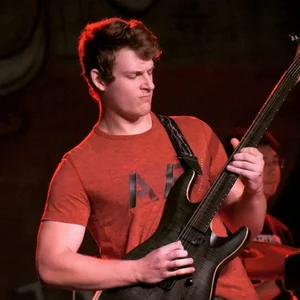
Taking music lessons is one of the best ways to improve, but the REAL progress happens BETWEEN lessons.
Whether you’re learning guitar, bass, or singing, your lessons give you direction, but your practice during the week is what truly builds muscle memory and helps those ideas stick. The good news is that practicing smarter doesn’t always mean practicing longer. Practicing smarter means practicing with focus, patience, and a clear plan.
Your days of sitting down to practice and thinking, “What should I even work on?” are over, and I'm here to help.
Why Smart Practice Matters
A lot of students think they need to practice for hours and hours every day to get better. While it’s true that more practice can help, consistency and focus matter more than the total amount of time. It’s a simple case of quality over quantity. You may be putting in the hours, but you have to make sure that they’re GOOD hours.
Practicing the same mistake over and over can actually make things mopre difficult to fix later on. But practicing slowly, carefully, and with clear goals in mind can help you build better habits.
Smart practice helps you:
Retain what you learned in your lesson
Avoid frustration
Improve timing, technique, and accuracy (quickly and efficiently)
Make music feel more natural over time
The goal is not to be perfect every time you practice. The goal is to make steady progress. Think of it like you’re trying to fill a bucket of water, one drop at a time. The bucket won’t fill up overnight, but it WILL fill up if you let the water keep dripping. (Each practice session = drop of water in this metaphor)
Start With What Your Teacher Assigned
The best place to start is with the material from your most recent lesson.
It can be tempting to jump straight into random songs, YouTube videos, or new exercises, but your teacher likely gave you something specific for a reason. That assignment may be designed to fix a technique issue, prepare you for a song, improve your rhythm, or help you understand a musical concept more clearly.
Before adding anything extra, ask yourself:
“What did we work on in my last lesson?”
That might include a clean chord change, a sick bass line, a “boring” vocal exercise, a scale, a rhythm pattern, or part of a song. Whatever it is, start there first.
Break Practice Into Smaller Sections
One of the biggest practice mistakes students make is trying to play or sing entire songs from beginning to end every time.
That can be fun, but it’s not the most effective way to improve. (Trust me, I’ve tried)
The best way to do it is to focus on smaller sections at a time. If one chord change is difficult, practice just that transition. If one measure of a bass line keeps falling apart, isolate that measure. If one vocal phrase feels strained, work on that phrase slowly before putting it back into the full song.
Smaller practice sections make it easier to work on the things that need improvement.
For example, instead of practicing an entire song for 20 minutes, you might spend:
5 minutes warming up
10 minutes on the hardest section
5 minutes playing through the song
This kind of practice is MUCH more effective than just playing from the top over and over and over and over.
Think about it this way. Practicing an entire song when there’s only one part that you struggle with is like ironing your ENTIRE wardrobe when you’ve only got one wrinkled shirt. You see my point?
Practice Slowly First
Slow practice is one of the fastest ways to improve, but don’t think about it as practicing “slow”. Think about it as practicing “smooth”. My guitar teacher used to always tell me, “Slow is smooth, smooth is fast”.
It may feel boring at first, but slowing things down gives your brain and body time to understand what is happening. This is especially important for guitar, bass, and voice because music requires coordination, timing, muscle memory, and listening skills all at once.
If you can’t play or sing something cleanly at full speed, slow it down until you can.
For guitar and bass students, this may mean practicing a chord change, riff, scale, or rhythm pattern at a slower tempo.
For vocal students, it may mean slowing down a melody, speaking the rhythm first, or practicing a phrase with lighter volume before adding more power.
Speed comes later. Accuracy comes first.
Use a Metronome or Backing Track
Timing is one of the most important parts of music, and it improves best when you practice with a steady beat.
The metronome is your best friend when it comes to learning music. It can help you build consistency and rhythm faster than you could possibly imagine, IF you use it the right way. It may feel awkward at first, especially if you’re not used to it, but it’s a great tool that teaches you to stay locked into the pulse of the music.
Backing tracks are also extremely helpful because they can give you a similar effect as the metronome, but they make practice feel more musical. Instead of practicing alone in silence with a click, you get used to playing or singing with other musical parts.
You don’t have to use a metronome for your entire practice session, although that would be a great idea. Even five to ten minutes of focused rhythm practice can make a huge difference.
Don’t Just Repeat. Listen.
Repetition is important, but mindless repetition doesn’t lead to improvement.
As you practice, listen carefully. Ask yourself:
Am I staying in rhtyhm?
Are the notes clear?
Am I rushing or dragging? (insert Whiplash reference joke here)
Am I relaxed or tense?
Am I making the same mistake each time?
This kind of listening helps you become your own coach during the week.
I also recommend recording yourself on your phone. Sometimes things feel different than they sound. A short recording can show you what is actually happening and help you know what to fix.
Make Practice a Habit, Not an Event
You don’t need a perfect practice setup or a huge block of time to start making improvements in your playing or singing.
For many students, practicing 10–20 minutes most days is more helpful than practicing for one long session right before the next lesson.
Short, consistent practice helps your brain retain information better. It also makes music feel like a normal part of your day rather than a stressful assignment.
A simple routine might look like this:
20-minute practice session:
Warm up for 2-3 minutes
Review your lesson assignment for 5-6 minutes
Practice the hardest part slowly for 5-6 minutes
End by playing or singing something fun for 5-6 minutes
Even a short session counts, as long as it’s focused.
End With Something You Enjoy
Practice should help you improve, but it should also remind you why you wanted to learn music in the first place.
After working on your lesson material, spend a few minutes playing or singing something you enjoy. This could be a favorite song, a riff, a bass line, a vocal melody, or even just experimenting with sounds.
Ending with something fun helps keep motivation high. It also makes it more likely that you’ll want to practice again the next day.
Music lessons should not feel like homework forever. They should help you build the skills to enjoy music even more.
Be Patient With the Process
Progress in music is not always instant. Some weeks feel great, and other weeks feel slower. That’s totally normal.
The important thing is that you keep showing up.
If something feels difficult, it doesn’t mean that you’re failing. It usually means you are working on a skill that just hasn’t fully developed yet. With the right practice, those difficult section will eventually start to feel easier.
Your teacher can certainly help guide you, but your weekly practice is what turns those lesson ideas into real improvement.
Final Thoughts
Practicing smarter between music lessons can make a huge difference in how quickly you improve.
Start with the material that your teacher assigned, break things into smaller sections, slow things down, listen carefully, and stay consistent. You don’t have to practice perfectly. You just need to practice with purpose.
If you’re taking guitar, bass, or singing lessons, remember this: the goal is not to become amazing overnight. The goal is to build small wins every week.
Those small wins add up.
If you’re looking for encouraging, personalized music lessons, I offer one-on-one instruction designed to help beginners stay motivated, improve faster, and actually enjoy the learning process. Click on one of the links below for more details!